

Fertility is the capacity to produce offspring. Generally, people need special treatment to help with their journey towards parenthood. This kind of treatment is called fertility treatment.
When to go for Fertility Treatment?
People with the following conditions should opt for fertility treatment:
- Younger than 35 and have been trying to conceive for a year
- 35 or older and have been trying to conceive for 6 months
- Irregular, painful or no periods while trying to get pregnant
- Endometriosis, pelvic inflammatory disease and past miscarriage
- Male factors such as history of testicular trauma or past infertility with another partner
Fertility Treatment
Fertility can be treated with the help of drugs and procedures.
Fertility Drugs
The two types of fertility drugs are as follows:
- Clomid: Clomid is an effective drug that increases the number of eggs produced by the ovaries. People with PCOS opt for this treatment, and women who have late or irregular periods can also take Clomid. Clomid acts on the pituitary gland, stimulating it to release an excess follicle-stimulating hormone (FSH) and luteinizing hormone (LH). This encourages the ovaries to produce more eggs. Clomid should be consumed under medical supervision as it can lead to multiple births. Side effects of Clomid are upset stomach, mood swings, sore breasts and hot flashes.
- Gonadotrophins: People with PCOS who have already tried Clomid but haven’t been successful can opt for Gonadotrophins. These hormones are injected into the body to increase egg production. Side effects of Gonadotrophins are feeling bloated and pain in the lower belly.
Assisted Reproduction Therapy (ART)
ART is a set of procedures to manipulate sperm and egg through intra-uterine insemination (IUI) and in-vitro fertilization (IVF).
Intra-uterine Insemination (IUI)
In this method, a small amount of sperm is inserted inside the cervix during the ovulation phase of the woman. The sperm is washed and concentrated to increase the chances of fertility. The success of treatment depends on whether the treatment is done with or without the FSH drug.
IUI is suggested when:
- Partner has low sperm count and motility
- Partner's semen is normal, and mucus is receptive to sperm
- Partner's semen is normal, but cervical mucus is absent
- Donor insemination, which is quite successful when you are below 36
- Treatment is performed when a partner is interstate or overseas; treatment is successful when sperm freeze and thaw well
Generally, IUI is performed three to four times; if these attempts fail, IVF is preferred.
In vitro Fertilization (IVF)
IVF involves fertilizing an egg in the lab and inserting the fertilized egg inside the woman's uterus. IVF includes the following steps:
- FSH injections are given to the woman to stimulate the ovaries to produce follicles
- A vaginal ultrasound is performed to monitor follicle growth
- When follicles grow big enough, a trigger injection is administered to stimulate ovulation
- A gynecologist collects eggs through vaginal ultrasound and a procedure called guided egg collection
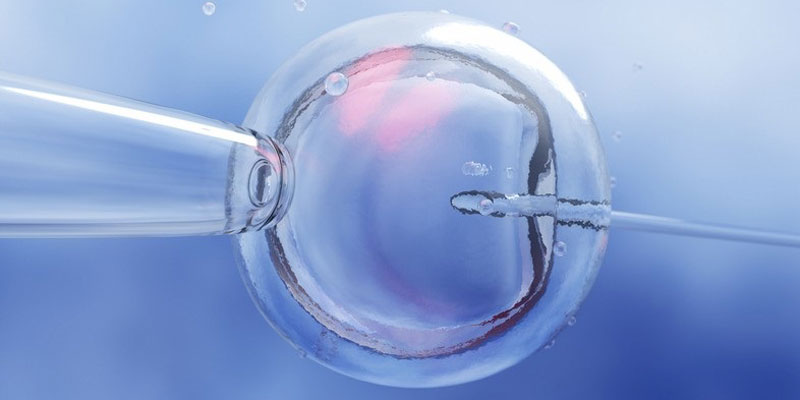
- Eggs and sperm are placed in a dish with culture fluid. In the case of ICSI, a single sperm is injected into the egg
- The combined egg and sperm are tested for signs of fertilization
- One or two embryos are transferred into the uterus between 2 to 5 days of fertilization
- For two weeks, a supplementary course of progesterone is given through the vagina from the day of fertilization
- Other embryos that have developed normally are frozen in liquid nitrogen for future use
Intracytoplasmic Sperm Injection
Similar to IVF, a single sperm is injected into a mature egg. ICSI is performed due to male factors that affect fertility and when IVF hasn’t been successful. Male factors include an abnormal number of sperms and their motility. After sperm is injected into the egg, the embryo is placed inside the uterus.
If you are facing difficulty in conceiving through natural means, contact Matric Hospital. They are equipped with latest scientific technology that can help you fulfil your dream of parenthood.
All your Doubts Answered!
1. What are the hospital's operating hours?
Matrix Hospital operates 24/7, including public holidays. Outpatient services are typically available from 9:00 AM to 5:00 PM, Monday to Saturday.
2. Do I need an appointment before visiting the hospital?
Walk-in patients are welcome. However, for non-emergency consultations, booking an appointment is recommended to reduce waiting time. To book an appointment, call us on +91 8886665551 or +91 7799886623
3. What specialties and services are available?
We offer a range of specialties, including General Medicine, Pediatrics, Obstetrics & Gynecology, General Surgery, Orthopedics, and Emergency Services. Diagnostic facilities like X-rays, ultrasound, and pathology are also available.
4. Does the hospital have a pharmacy on-site?
Yes, our in-house pharmacy operates 24/7 and is stocked with a wide range of medicines and emergency drugs.
5. Are cashless insurance and TPA services available?
Yes, we are empaneled with multiple insurance providers and TPAs for cashless hospitalization. Our billing desk can assist with insurance-related queries.
6. What is the hospital’s policy for patient visitors?
Visitors are allowed during designated hours, generally between 4:00 PM and 7:00 PM. Only one visitor is permitted per patient at a time for the comfort and safety of all.
7. How do I get a copy of my medical records or discharge summary?
You can request medical records and discharge summaries from the Medical Records Department. A valid ID and written authorization may be required for release.
8. What emergency services are available?
Our 24-hour emergency department handles trauma, cardiac, pediatric, and general medical emergencies, supported by an on-call team of doctors and critical care services.
9. Is ambulance service available?
Yes, we have a 24/7 ambulance service equipped with basic and advanced life support systems. For assistance, call our emergency helpline at +91 8886665551 or +91 7799886623.
10. Can patients choose their preferred doctor for treatment?
Absolutely. Patients can request consultations with a doctor of their choice, subject to the doctor's availability.
11. Are maternity services available?
Yes, we offer comprehensive maternity care, including antenatal checkups, delivery services, cesarean procedures, and postnatal care.
12. How can I provide feedback or make a complaint?
We value your feedback. You can share your comments through our feedback forms available at the reception, email us at matrixhospitalmehdipatnam@gmail.com, or speak to our Patient Relations Officer at +91 8886665551 or +91 7799886623.
13. Do you offer health check-up packages?
Yes, we offer a variety of preventive health check-up packages tailored for different age groups and medical needs. You can inquire at the reception or check our website, www.matrixhospitalmehdipatnam.com, for details.
14. Is parking available at the hospital?
Yes, we provide limited parking facilities for patients and visitors on a first-come, first-served basis. Dedicated parking for emergency cases is always available.
15. What are the modes of payment accepted?
We accept cash, credit/debit cards, UPI payments, and online bank transfers. EMI options may also be available for higher-value procedures — please check at the billing counter.
16. Do you have facilities for overnight stays for patient attendants?
Depending on the room category and availability, one attendant may be allowed to stay with the patient. Basic bedding can be arranged on request.
17. Are COVID-19 vaccinations and testing services available?
Yes, our hospital offers COVID-19 RT-PCR and Rapid Antigen tests, as well as vaccination services as per government guidelines. Please contact the front desk at +91 8886665551 for current availability.
18. Can medical certificates or fitness certificates be issued?
Yes, our doctors can issue valid medical and fitness certificates after an appropriate examination. Requests can be made at the outpatient reception.
19. What is the process for admitting a patient?
For planned admissions, the consulting doctor will issue an admission slip, which can be submitted at the admission desk. In emergencies, patients can be admitted directly through the casualty/emergency department.
20. How can I reach the hospital in case of a medical emergency?
For emergencies, you can directly bring the patient to our 24/7 emergency department or call our ambulance helpline at +91 8886665551 or +91 7799886623. Our emergency team is equipped to handle all types of medical situations promptly.